Внедрение классового подхода в натуре
Jul. 2nd, 2012 03:15 pm![[personal profile]](https://www.dreamwidth.org/img/silk/identity/user.png) xaxam
xaxam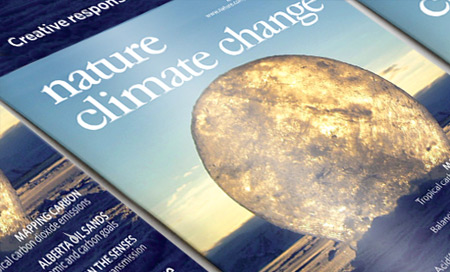
Природа, ...мать!
Когда б таких ...дей ты иногда не посылала ...!
| Идут по одесскому причалу вальяжная дама с ребёнком в матросской кофточке, навстречу им босяк. Ребёнок читает по слогам название большого белого корабля: - Сер-гей Е-се-нин... Мам, а кто такой был Сергей Есенин? - Сергей Есенин, сыночка, был такой русский поэт... Босяк не выдерживает и вмешивается в разгвор: - Мадам, не надо врать ребёнку! Вся Одесса знает, что "Сергей Есенин" - это бывший "Лазарь Каганович". Старый анекдот. |
Вся Одесса знает: не напечатавши статью в Nature или Science (а лучше, чтобы это была cover paper, вынесенная на обложку), невозможно рассчитывать на академическую позицию в приличном месте. Журнал Nature тоже знает, что вся Одесса это знает, и не каждому предоставляет такую возможность. Поэтому каждое слово каждой такой статьи - золото.
Вот возьмём свеженькую статью Маслина и Остина с названием Uncertainty: climate models at their limit? (знак вопроса - авторский)*. Риторический вопрос, которым задаются авторы: Как же так получается, что чем больше мы изучаем климат и чем точнее модели строим, тем более недостоверные и неточные результаты получаем? Учёные должны, наконец, решить, как объяснить такой странный эффект. Ну, конечно, первое объяснение, которое приходит в голову климатологам, -
Но главное - надо признать, наконец, что модели ничего не предсказывают в будущем, в лучшем случае - в прошлом, и потребовать от политиков начать действовать немедленно, сейчас же. Поскольку всем и так давно известно, что надо делать для спасения Одессы и всей Галактики в целом: держать и не пущать, штрафовать и грантовать.
Чтобы подкрепить это послание Urbi et Orbi, Nature решила открыть новый "дочерний" журнал, Nature: Climate Change, целиком посвящённый изучению материалов прошлого, Четвёртого Съезда
При этом дочки, похоже, не слишком уважают свою матерь. Авторы статьи про потепление морей явно не ознакомились с основополагающими тезисами Маслина и Остина. Иначе бы не предсказывали повышение уровня моря с четырьмя значащими цифрами (139.4 см) к 2300 году. Желающие могут сами полюбоваться страшными цифрами, рассчитанными на основе наиточнейших моделей, по выжимке, доступной в открытой (непартийной) печати.
С другой стороны, как раз такому пристрастию к точным цифрам есть, как нам кажется, довольно простое объяснение. Достаточно посмотреть на (открытый) список редколлегии дочернего журнала: там по какому-то недосмотру приведена "учёная" специализация главных редакторов и ординарных членов:
Главред - бывший Media and Communications Officer the United Kingdom's National Oceanography Centre in Southampton.Ребята, как воскликнула бы Латынина! Да они же ни же все бухгалтеры да адвокаты!! Понятно, что бухгалтер никогда не смирится с цифрой "примерно 20%-25% прибыли/убытка", у него же компьютер сойдёт с ума!
Старший Редактор с говорящей фамилией Monica Contestabile - economic valuation of environmental impacts, market based instruments in climate change policy and carbon accounting.
Члены Advisory committee (подряд, без единого пропуска!):
Research interests: economics, policy
Research interests: sociology, policy, human drivers of environmental change
Research interests: sociology, public opinion, climate change politics and policy
Research interests: adaptation, sustainable development
Research interests: anthropology, communication
Research interests: environmental ethics, international climate policy, energy innovation
Research interests: mitigation, emissions pathways, international climate policy, uncertainties in climate projections
Research interests: socioeconomics, risk management, natural resource governance, impacts and adaptations
Research interests: psychology, risk communication and perception
Research interests: adaptation and mitigation, resilience, vulnerability, public perception and engagement
Если ещё кому-то интересно, что ждёт климатологию, последняя фраза передовицы Маслина и Остина призывает с оптимизмом работать навстречу Пятому Съезду ИПСС, хотя заранее можно предсказать, что настоящих учёных впереди ждут тяжёлые времена. Классовая борьба тоже, как известно, нарастала по мере продвижения к социализму.
_______________________
*Статья настолько хороша, что даже далёким от Природы читателям могло бы быть интересно её посмотреть. К чёрту копирайты, когда речь идёт о программных документах Партии Интеллекта и Разума!
For the fifth major assessment of climate science by the Intergovernmental Panel on Climate Change (IPCC), due to be released next year, climate scientists face a serious public-image problem. The climate models they are now working with, which make use of significant improvements in our understanding of complex climate processes, are likely to produce wider rather than smaller ranges of uncertainty in their predictions. To the public and to policymakers, this will look as though the scientific understanding of climate change is becoming less, rather than more, clear.Uncertainty: Climate models at their limit?
Mark Maslin & Patrick Austin
Journal name: Nature
Volume: 486,
Pages: 183–184
Date published: (14 June 2012)
DOI: doi:10.1038/486183aPublished online 13 June 2012
Estimates of climate-change impacts will get less, rather than more, certain. But this should not excuse inaction, say Mark Maslin and Patrick Austin.
Scientists need to decide how to explain this effect. Above all, the public and policymakers need to be made to understand that climate models may have reached their limit. They must stop waiting for further certainty or persuasion, and simply act. Why do models have a limited capability to predict the future? First of all, they are not reality. This is perhaps an obvious point, but it is regularly ignored. By their very nature, models cannot capture all the factors involved in a natural system, and those that they do capture are often incompletely understood. Science historian Naomi Oreskes of the University of California, San Diego, and her colleagues have argued convincingly that this makes climate models impossible to truly verify or validate1.
The more-concrete, less-philosophical problems can be illustrated by following the path of cascading uncertainties that are building up in the models used today.
One of the first inputs into any climate model is the expected accumulation of greenhouse gases and aerosols in the atmosphere by the end of the century. These projections are based on economic models that predict global fossil-fuel use over 100 years given broad assumptions about how green the global economy will become. The economic collapse of 2008 showed dramatically, and to our cost, how difficult it is to predict changes in the economy. And economic unpredictability is just the beginning.
Another layer of uncertainty comes from how the global climate models are weighted. For example, in the most recent IPCC assessment, released in 2007, the economic scenarios were input into more than 20 general circulation models. Every model has its own design and parameterizations of key processes, such as how to include the effects of clouds; and every model and its output was assumed to be equally valid, even though some perform better than others in certain ways when tested against historic records. The differences between the models will be exacerbated in the 2013 IPCC assessment, because many, but not all, of the models have improved spatial resolution.
The outputs from the circulation models are then often used to drive detailed regional climate models to predict local environmental variations. Such regional models have huge uncertainties, thanks largely to the fact that precipitation is highly variable over small scales of time and space. This leads to a large range of potential futures, some of which contradict others. For example, detailed hydrological modelling of the Mekong River Basin using climate model input from the UK Met Office's HadCM3 model projects changes in annual river discharge that range from a decrease of 5.4% to an increase of 4.5% (ref. 2). Changes in predicted monthly discharge are even more dramatic, ranging from a fall of 16% to a rise of 55%. Advising policymakers becomes extremely difficult when models cannot predict even whether a river catchment system will have more or less water.
Projected regional changes are then used as a basis for 'impact models' that estimate the effect on the quality of human life. But these effects often depend more on the relative resilience of a given society than on the magnitude of environmental change. Even the most advanced socioeconomic models, which look at the monetary costs arising both in market and non-market sectors, often fail to account adequately for major aspects of human suffering that are hard to quantify3.
Struggle with extremes
A key debate has emerged between scientists about how well models can predict extreme climates. On the optimistic side, Tim Lenton of the University of Exeter, UK, has argued that, with more research, models will help to provide an early warning system of climatic tipping points such as the melting of the Greenland ice sheet, the dieback of the Amazon rainforest and the shift of the West African monsoon4. By contrast, Paul Valdes of Bristol University, UK, argues that climate models are too stable, built to 'not fail' rather than to simulate abrupt climate change5. When the current IPCC models were tested against four major past climate changes, he notes, two were unable to even get the basic climate before the shift correct and the other two had to be fed parameters up to ten times greater than would be realistic to produce the abrupt shift.
The climate models, or 'climate simulators' as some groups are now referring to them, being used in the IPCC's fifth assessment make fewer assumptions than those from the last assessment, and can quantify the uncertainty of the complex factors they include more accurately. Many of them contain interactive carbon cycles, better representations of aerosols and atmospheric chemistry and a small improvement in spatial resolution.
Yet embracing more-complex processes means adding in 'known unknowns', such as the rate at which ice falls through clouds, or the rate at which different types of land cover and the oceans absorb carbon dioxide. Preliminary analyses show that the new models produce a larger spread for the predicted average rise in global temperature. Additional uncertainty may come to light as these models continue to be put through their paces. Dan Rowlands of the University of Oxford, UK, and his colleagues have run one complex model through thousands of simulations, rather than the handful of runs that can usually be managed with available computing time. Although their average results matched well with IPCC projections, more extreme results, including warming of up to 4°C by 2050, seemed just as likely6. As computing power becomes more accessible, that 'hidden' uncertainty will become even more obvious.
Stable and confident
None of this means that climate models are useless. The present models are clearly able to reproduce natural climate variability over the past 150 years, and have provided an essential test of the theoretical link between CO2 and global temperatures. Their vision of the future has in some ways been incredibly stable. For example, the predicted rise in global temperature for a doubling of CO2 in the atmosphere hasn't changed much in more than 20 years (see 'Prediction stability').
This message of stability and confidence is often lost on the public: when Andreas Schmittner of Oregon State University in Corvallis published a value for the climate's sensitivity to a doubling of CO2 that was on the low side of previous estimates7, the media declared that “climate sensitivity was overestimated”. This was despite some significant criticisms of the study and the fact that the findings still fell within the range of those in all the IPCC reports. This is a sad indicator of the headlines we might expect in the wake of the next IPCC report.
One approach to tackling the public-perception problem is to subtly rephrase the conclusions, placing the uncertainty on the date by which things will happen, rather than onto whether they will happen at all. A recent study, for example, showed that the politically expedient 2°C limit will be reached between 2040 and 2100, depending on our emission pathway and the model used8. This 'when' not 'if' approach is powerful.
In the face of scientific uncertainty, various philosophies for decision-making have arisen. But perhaps the best approach is to ensure that policies include 'win–win' strategies. Supporting a huge increase in renewable energy would reduce emissions and help to provide energy security by reducing reliance on imported oil, coal and gas. Reduced deforestation and reforestation should draw-down CO2 from the atmosphere and help to retain biodiversity, stabilize soils and provide livelihoods for local people through carbon credits. Measures that lessen car use will increase walking and cycling, which in turn reduces obesity and heart attacks. No one can object to creating a better world, even if we turn out to be extremely lucky and the scale of climate change is at the low end of all projections.
“The biggest obstacle is the unwillingness of politicians to act in the longterm interests of society.”
The biggest obstacle is the unwillingness of politicians to act in the long-term interests of society. Politicians use public opinion and scientific uncertainty as excuses for inaction. They used to say “we need to wait until scientists prove that mankind is causing climate change”. That hurdle has, arguably, passed, so now they have moved on to “we need to wait until scientists can tell us exactly what will happen and what the costs are”, or, “we need to wait for public opinion to be behind action”. The former will never occur, because modelling can never provide that level of certainty. The latter is a sleight of hand. Politicians often take action without public support, from wars to bank bailouts, taxation to health-care reforms.
Greater knowledge and improved models will always be desirable, but they are not a panacea for political and public reticence to action on climate change. Despite the uncertainty, the weight of scientific evidence is enough to tell us what we need to know. We need governments to go ahead and act, as both the United Kingdom and Mexico have done in making national laws that contain carbon reduction targets of 80% and 50%, respectively, by 2050. We do not need to demand impossible levels of certainty from models to work towards a better, safer future.
Mark Maslin and Patrick Austin are with the Environment Institute and Department of Geography, University College London, Pearson Building, Gower Street, London, WC1E 6BT.


![[identity profile]](https://www.dreamwidth.org/img/silk/identity/openid.png)
no subject
Date: 2012-07-02 12:43 pm (UTC)no subject
Date: 2012-07-02 12:48 pm (UTC)В общем, я б ещё подумал, а не бросался что-то трясти...
no subject
Date: 2012-07-02 01:03 pm (UTC)В 1991 году, было пресловутое извержение вулкана Пинатубо, когда в воздух поднялась сера и планетарная температура упала, отлично все расставило по своим местам.
no subject
Date: 2012-07-02 02:38 pm (UTC)Просто не надо делать вид, что по анализу мочи можешь предсказать дату неизбежного инсульта, и требовать на основании этого, чтобы пациент принимал порошок из рога единорога по цене в стопиццот долларов за порцию (с подмигиванием, что-де в нашей аптеке скидка в 10% членам профсоюза). Потому как шарлатанов во все времена заслуженно вываливали в смоле и перьях и возили по городу на осле задом наперёд.
no subject
Date: 2012-07-02 03:07 pm (UTC)Вообще география пока сильно отстает от других наук, в значительной степени пока пребывая в описательном этапе.
no subject
Date: 2012-07-03 06:56 am (UTC)Шутка про бухгалтеров оказалась совсем не шуткой: одна из последних статей в Nature Climate Change (http://www.nature.com/nclimate/journal/vaop/ncurrent/full/nclimate1560.html) - результаты бухгалтерского аудита китайской отчётности по углекислоте.
Как и следовало ожидать, бдительные бухгалтеры нашли недостачу больше, чем в гигатонну. Надо думать, следующий этап - ОБХСС, повторные ревизии, суд над главбухом, конфискация
имуществаквот на выхлоп.no subject
Date: 2012-07-04 03:33 pm (UTC)увы и ах, это неплохо описывает кое-какие тренды в современной медицине. согласно законам госте.. не натюр но всякий ланцет и джама.
no subject
Date: 2012-07-02 03:44 pm (UTC)ПрекраснодушныеПрекрасные люди предлагают свои идеитиккун оламкак нам реорганизовать Рабкринкак нам обустроить этот мир:Reduced deforestation and reforestation should draw-down CO2 from the atmosphere and help to retain biodiversity, stabilize soils and provide livelihoods for local people through carbon credits. Measures that lessen car use will increase walking and cycling, which in turn reduces obesity and heart attacks. No one can object to creating a better world, even if we turn out to be extremely lucky and the scale of climate change is at the low end of all projections.
The biggest obstacle is the unwillingness of politicians to act in the long-term interests of society.
По крайней мере насчет политиков они абсолютно правы. Не мешало бы их свергнуть.
no subject
Date: 2012-07-02 04:00 pm (UTC)no subject
Date: 2012-07-02 04:18 pm (UTC)Трудно спорить.
А вообще, у меня есть простая модель - удвоение CO2 приведет к пропорциональному росту массы растений, которые этот самый си-о-два потребят в свое удовольствие.
no subject
Date: 2012-07-02 05:11 pm (UTC)А где научно выверенное обоснование, с приложением документов строгой финансовой отчётности?
no subject
Date: 2012-07-02 05:15 pm (UTC)Ты как девочка прям...
Date: 2012-07-02 05:19 pm (UTC)А сегодня эти сто шекелей лежат в моём кармане. Стоячий, лежачий, летучий, вонючий - ма ихпат?
А вот чей карман - очень ихпат.
no subject
Date: 2012-07-02 05:22 pm (UTC)В мой, конечно. Потому что из лежачего углерода он перейдет в летучий метан. А летучий метан, решением ООН сегодня признан главной опасностью. Поэтому эти отсталые псевдо-ученые борются за утверждение вчерашнего дня науки. А я за самый сегодняшний!
no subject
Date: 2012-07-16 04:02 am (UTC)есть такой закон Либега (Liebeg's law)
no subject
Date: 2012-07-02 04:21 pm (UTC)Вот если бы химикам можно было так писать! Немного про вибронный спектр, а потом много эмоционального про его значение для рабочего человека на современном этапе.
no subject
Date: 2012-07-02 04:31 pm (UTC)Технические подробности будут разработаны в последующих документах.
А если серьёзно, то я действительно охренел. В Натуре. В Натуре - такое?!
no subject
Date: 2012-07-02 05:20 pm (UTC)Я не совсем понимаю, что такое климатология как наука, вроде геофизика была. У нас тут на Восточном побережье такое творится, что со всем в статье согласна. :(
P.S. Зато они в бридж играли при свечах! Однако мое предложение купить канделябры по-прежнему отвегают. :)
no subject
Date: 2012-07-04 05:18 am (UTC)Британские учёные™ тоже задумываются над этим вопросом (http://i-eron.livejournal.com/82090.html?thread=785066#t785066) ;-)
Завсегда других упрямей и вздорней
Date: 2012-07-02 07:04 pm (UTC)no subject
Date: 2012-07-03 08:39 am (UTC)в свете увеличивающихся объёмов компьютерных симуляций, предлагаю съезду к 8-му подкинуть им идею о влиянии на климат, оказываемом таким количеством бессмысленно работющих суперкомпьютеров. "первая производная глобального потепления".
no subject
Date: 2012-07-03 06:54 pm (UTC)no subject
Date: 2012-07-04 04:54 am (UTC)no subject
Date: 2012-07-04 08:16 am (UTC)Моим климатологическим друзьям посвящается
Date: 2012-07-04 04:12 am (UTC)